Building 312
Operation NapoleonBuilding 312 is a converted warehouse near the Capitol in Washington, D.C., and the headquarters of a clandestine intelligence organization. Its walls of screens and vast image archive turn remote surveillance into operational power: when its analysts detect an unfamiliar mark on Vatnajökull, director Vytautas Carr mobilizes a secret mission to recover what the United States had lost there years before.
Setting and Facilities
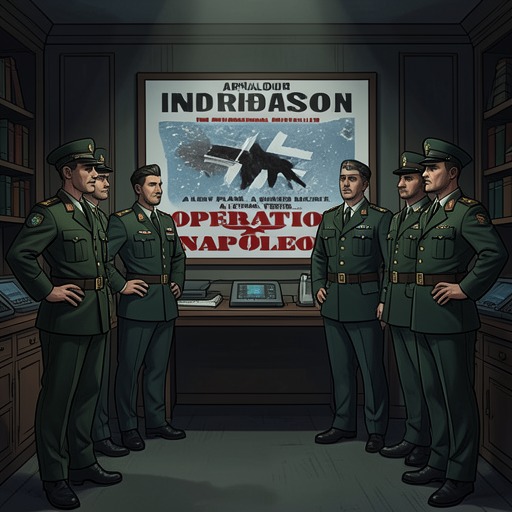
Originally a warehouse, Building 312 was extensively converted to house one of the capital’s clandestine organizations, with no expense spared inside or out. Its first-floor control room is organized around four long banks of screens and control panels. Twelve powerful computer units operate behind a cordoned-off section, their fans keeping the room cool, while armed guards watch the doors. The room’s equipment and security make it both a technical workplace and a protected center of authority.
Intelligence and Surveillance
Official documents refer to the headquarters simply as Building 312. Established shortly after 1960, during the Cold War’s most intense period of mutual suspicion, the organization initially analyzed spy photographs of the Soviet Union, China, Cuba, and other countries designated as U.S. enemies. After the Cold War, its work expanded to monitoring terrorist bases in the Middle East and conflicts in the Balkans. It controls eight satellites orbiting between 800 and 1,500 kilometres above Earth.
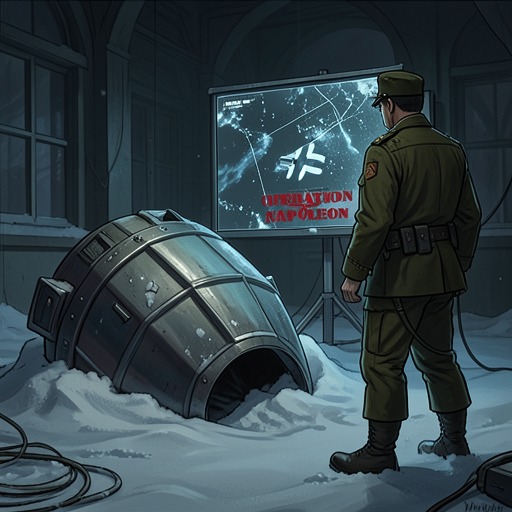
Its database holds tens of millions of satellite photographs collected over four decades. The system compares archived images with new transmissions, processes and catalogs the information, and raises an alert when something irregular appears. In the control room, Carr studies two images of a section of south-east Iceland’s Vatnajökull: one taken about a year earlier and another made that day. The earlier photograph shows an unremarkable expanse of ice and crevasses; the new one contains a small black mark. Once magnified and clarified, the mark becomes the signal that the glacier is returning an object lost there long ago.
Command and the Iceland Operation
As the organization’s director, Carr turns the satellite discovery into a military assignment. He orders a commander to go to the U.S. base in Iceland with two special forces squadrons and to present the deployment as a routine exercise. He also anticipates political resistance: local officials are to be directed to the defense secretary, Carr will meet with the Icelandic government, and Immanuel Wesson is to take over the U.S. Embassy in Reykjavík as spokesman. The base’s sensitivity makes the operation a matter of diplomacy as well as recovery, while the covert nature of the mission is made explicit in Carr’s instructions.
The chain of command does not ensure agreement about how the mission should be carried out. After a conversation with Ratoff, Carr puts down the receiver and immediately begins arranging the operation’s second phase. Although Ratoff delivers results, Carr knows his army record and worries that he is over-zealous; the defense secretary has already expressed concern about his involvement. Carr nevertheless relies on him to retrieve documents from the wreck, while the plan also calls for trucks to move the dismantled aircraft to Keflavík and for the bodies to accompany it. The sensitive contents are not fully shared with the mission director in advance, leaving the recovery dependent on instructions and trust as much as on force.
Later, the dispute over the rescue team reaches the level of government talks. An American general bluntly demands that the Icelandic team be removed from the glacier, while the Icelandic foreign minister has raised an allegation that the Defense Force failed to respond to a mayday requesting helicopter assistance. Ratoff subsequently tells Carr that Carr knew what he was doing when he placed him in charge, and presents a briefcase containing information in the hope of reaching an agreement. Building 312’s reach is therefore visible not only in its ability to detect a remote change in the ice, but in the secretive, contested decisions that follow from that detection.